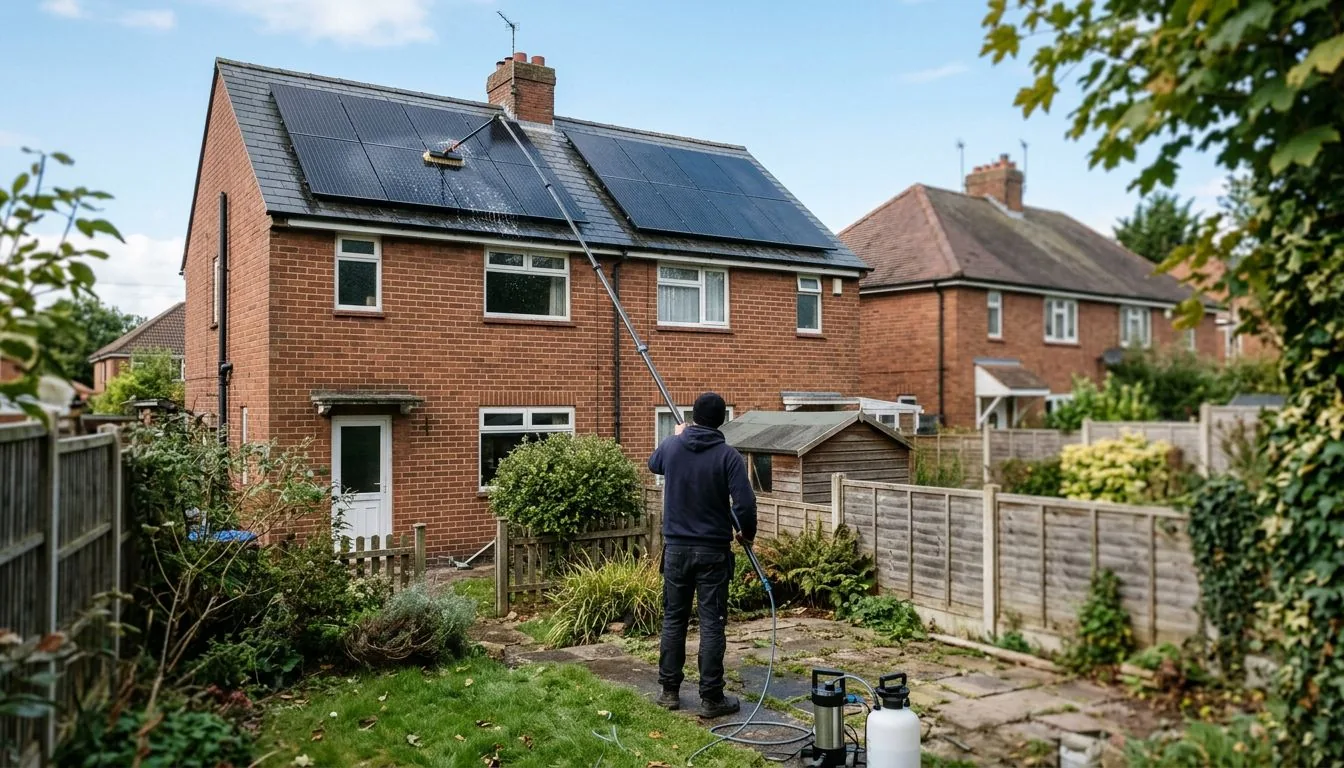
Solar panel maintenance is much lighter than most people expect. Panels have no moving parts, use no fuel and need no yearly service like a boiler. A few simple habits still protect your output and your warranty.
This guide covers cleaning, monitoring, inverters, birds and when to call a professional. Read it once, then keep a short checklist.
Do solar panels need maintenance?
Yes, but not much. Most of the work is looking rather than doing. Good modern panels lose roughly half a percent of output a year, so after 25 years they still make around 85–90% of their original output.
Panels typically last 25–30 years or more. Our guide to solar panel lifespan explains what affects that. Meanwhile, the points below keep a system healthy.
Check your monitoring app every month
Your inverter normally comes with an app that shows how much power you make. Look at it once a month. A sudden drop is the first sign that something is wrong.
Watch for these signs:
- A fault light or error code on the inverter
- Zero output on a bright day
- Output well below the same month last year
- A big gap between morning and afternoon, which can mean new shade
Compare your numbers with monthly UK solar output data and with your installer’s estimate. Weather changes output from day to day, so judge by the month, not the day.
Cleaning solar panels
Dirt, leaves, moss and bird droppings can block light. In most of the UK, rain does a good share of the cleaning, because panels sit at a slope. Northern cities such as Leeds and Manchester are a good example. See what solar generates in Leeds and Manchester solar costs and support for local yield figures. If a repair looks likely, what solar panels cost and save shows how upkeep fits into the wider sums.
However, rain does not remove everything. Droppings and moss tend to stay put. Panels on a low tilt also self-clean less, so solar on a flat roof may need a closer look.
Clean only when the panels look dirty or your output has dropped for no clear reason. If you do clean them, follow these rules:
- Use soft tools and plain water, and avoid harsh chemicals.
- Never use a pressure washer at close range.
- Work from the ground, or hire a professional.
- Do not climb onto a roof.
Falling from a roof is a far bigger risk than a few dirty panels. A professional with a water-fed pole is the safe choice for most roofs. Ask your installer first, since some warranties set out how cleaning must be done. If you are still planning the system, see how installing solar panels works for what the fitters leave behind.
Winter care
Snow usually slides off panels as it melts, and you should not rake it off. Short winter days mean low output anyway, because December output is roughly a quarter to a third of June’s. Our guide to how panels perform in winter and cloud covers what to expect.
Inverters: the part you will probably replace
The inverter turns the panels’ DC power into the AC power your home uses. It works hard every day, so it is the part most likely to fail first. You may need to replace the inverter once during the panels’ life.
Ask your installer for the inverter warranty in writing. Batteries have their own warranties. For example, the GivEnergy 9.5 kWh battery carries a 12-year warranty with unlimited cycles, according to its 2026 datasheet.
Keep birds out
Birds nest under panels because the gap is warm and sheltered. Their nests and droppings can block airflow, and they can damage cables. Mesh or a similar guard fitted around the array stops them.
Fit proofing early, because removing a nest is harder than preventing one. See pigeon-proofing options for how each method works.
Professional checks
There is no legal yearly service for home solar. Even so, some owners book a periodic check by the installer or a specialist. It can look at cables, connectors, fixings and the inverter’s ventilation.
A check is also worth booking if your output falls and you cannot find a cause. Meanwhile, keep your MCS certificate, handover pack and warranty papers together. You need them if you ever make a claim or sell the house.
Care by panel type
Most panels sold for UK homes today are monocrystalline, and they need the same care as any other type. Other kinds exist, but the basics stay the same: keep them clear, keep an eye on output and use a professional for anything on the roof. See the main types of solar panel if you want to compare them.
Your maintenance checklist
- Monthly: look at your monitoring app.
- Spring and autumn: look at the panels from the ground. Check for moss, droppings and leaves.
- After storms: check for loose parts or fault lights.
- When output drops: rule out shade, then call your installer.
- Once in the panels’ life: budget for an inverter replacement.
For the wider picture, read how a domestic solar system fits together.
Sources: GOV.UK Smart Export Guarantee guidance on why the MCS certificate matters; GivEnergy UK 9.5 kWh datasheet (2026).
Frequently Asked Questions
Q: How often should I clean my solar panels?
A: Only when they look dirty, or when output drops for no clear reason. Rain handles much of the job in the UK. If you do need a clean, use a professional with a water-fed pole rather than climbing on the roof.
Q: Do solar panels need servicing like a boiler?
A: No. There is no legal yearly service for home solar. Some owners book a periodic check for peace of mind, and you should plan to replace the inverter once.
Q: How do I know if my panels are underperforming?
A: Compare your monitoring app with the same month last year and with your installer’s estimate. Allow for the weather. If output falls and you find no cause, ask your installer to check.
Q: What damages solar panels?
A: Failures are rare. Most faults come from manufacturing defects, water getting in, impact damage or poor installation. Your product warranty should cover the first two, which is why you should keep your paperwork.
Q: Will moss or lichen harm my panels?
A: It can reduce output and hold moisture at the edges. Remove it gently with a soft brush and plain water, or ask a professional. Avoid harsh chemicals near the edges, because they can affect seals.