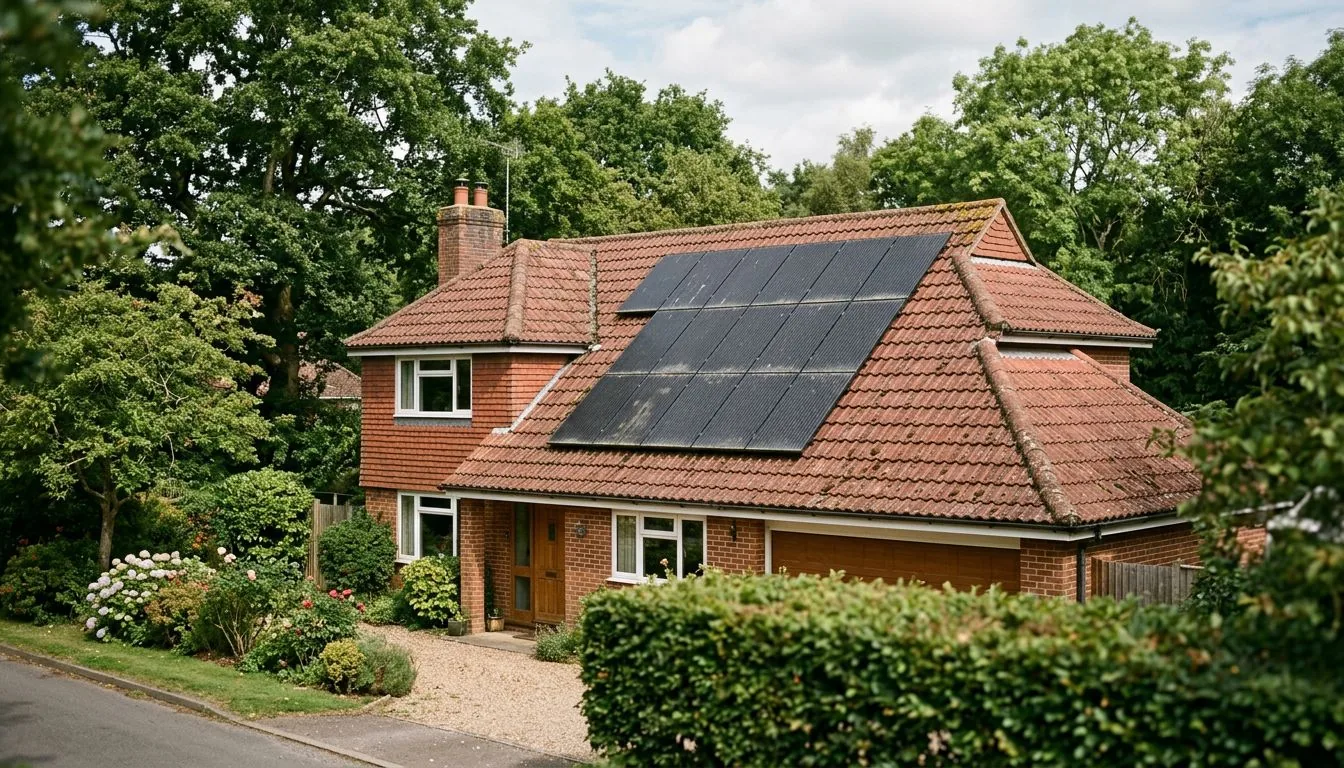
How long do solar panels last? In the UK, solar panels typically last 25–30 years or more. They do not switch off on a certain birthday. Instead, they simply make a little less power each year.
This guide explains what the lifespan of solar panels really means. It also covers warranties, the parts that wear out sooner, and how to get the most from your system.
How long solar panels last
Most manufacturers back their panels with a performance warranty of 25 to 30 years. That figure is a good guide to the expected solar panel lifespan. In fact, many panels keep producing power beyond it.
Panels have no moving parts, so there is little to wear out. What changes over time is the cell material, which slowly becomes less efficient. As a result, “lifespan” is really about how much output you still get.
Think of it as a long, gentle decline. Even a panel that is 30 years old is not broken. It just makes less than it did on day one.
Sources: MCS (Microgeneration Certification Scheme).
Degradation: what the numbers look like
Good modern panels lose roughly half a percent of output a year. After 25 years, they still make around 85–90% of their original output. Some warranties allow a bigger drop in year one, then about 0.4% a year after that, which gives about 87% at year 30.
For example, take a typical home. We assume about 900 kWh per kWp a year for a UK roof, so a 4 kWp system makes about 3,600 kWh in year one. At 0.5% a year, the same system still makes around 3,190 kWh in year 25.
That is a loss of about 400 kWh a year. However, it is small beside the savings you have already banked. For the effect of age on your finances, see how long solar takes to break even.
Our figures for the half-percent rate come from summaries of manufacturer warranties. They are a sound planning figure. Even so, check the exact datasheet for the panels you are offered.
Warranties: product, performance and battery
Two kinds of warranty matter. First, the product warranty covers faults in the panel itself. It usually runs 12 to 25 years. Second, the performance warranty promises a minimum output, and it usually runs 25 to 30 years.
Expect a product warranty of at least 12 years and a 25–30-year performance guarantee. Then read the small print. Look at how much output is guaranteed in the final year, and who pays for labour if a panel fails.
However, a warranty is only as good as the company behind it. If the maker closes, you may lose cover. For a side-by-side view of makers and their terms, see leading solar panel brands and warranties.
Batteries have a shorter warranty than panels. For example, the GivEnergy 9.5 kWh battery carries a 12-year warranty with unlimited cycles, according to its 2026 datasheet.
Sources: GivEnergy product datasheets.
What wears out first: the inverter
The inverter turns the panels’ direct current into household power. It works hard every daylight hour, so it is usually the first part to need attention. You may need to replace the inverter once during the panels’ life.
So plan for that when you work out the long-term cost. Also ask your installer about the inverter warranty and what a replacement involves. Our payback figures leave inverter replacement out, so it would stretch them slightly.
Mounting frames, cables and the roof fixings are built to last as long as the panels. Even so, they need a check from time to time. A good installer will explain what to look at.
What affects how long panels last
Several things can shorten or lengthen a panel’s useful life:
- Quality: panels from established makers with long warranties tend to last as claimed.
- Installation: poor mounting or wiring causes faults that look like ageing.
- Shade and dirt: shade does not age a panel, but dirt and bird nests can create hot spots or block light.
- Weather and location: wind, rain and frost are normal for UK roofs, and panels are built for them.
Location changes how much power you get, but not how long the panels last. For example, 1 kWp of south-facing panels at 35° makes about 945 kWh a year in Leeds, according to the EU’s PVGIS model. See solar panels in Leeds for the local detail. The same is true in wetter, windier areas such as Wales: rain and wind are normal operating conditions for panels, not a reason they wear out sooner.
Sources: PVGIS tool (EU JRC).
How to make your panels last
Most of the work happens on day one. So pick an MCS-certified installer and good panels. Also use an installer who belongs to a consumer code, and keep the paperwork and datasheets safe.
After that, a little care goes a long way. For instance, look over the panels from the ground now and then, and keep an eye on your generation figures. A sudden fall may point to a fault, so call your installer.
Our guide to solar panel cleaning and maintenance covers what to do, and what to leave to a professional.
However, DIY work needs extra care, because it may affect your warranty and your right to export payments. Read about DIY solar in the UK before you decide.
Is a 25-year lifespan worth it?
Yes, for most homes. For example, over 25 years, a typical 4 kWp system with no battery returns roughly £13,800 at today’s prices. That is about £6,300 more than it cost, based on our standard model at October 2026 prices.
That model assumes a cost of about £7,500. It also counts the savings from the electricity you use plus export payments at 12p per kWh. It leaves out the standing charge, maintenance and inverter replacement. So treat it as a guide, not a promise. Our costs and savings guide explains the wider picture behind these figures.
Therefore, long life is one of the main reasons solar can make sense. See the pros and cons of solar panels for the full picture. For a broader look at residential solar, visit our guide to solar panel systems for homes.
If you would like to compare quotes, get free quotes from local installers. We connect homeowners with installers, and we are not a manufacturer.
Finally, for more on what panels deliver as they age, read about the most efficient panels.
Frequently asked questions
How long do solar panels last in the UK?
Typically 25–30 years or more. The performance warranties from most makers run 25–30 years. The panels do not stop at that point, but they make a little less power each year.
Do solar panels stop working after 25 years?
No. A warranty ending is not the same as a panel failing. After 25 years, panels typically still make around 85–90% of their original output.
What is the degradation rate of solar panels?
Roughly half a percent of output a year for good modern panels. Some warranties allow a larger drop in year one, then about 0.4% a year. Check the datasheet for your model.
What part of a solar system fails first?
Usually the inverter. However, you may need to replace it once during the life of the panels. Ask your installer about its warranty.
Does the UK climate shorten the life of solar panels?
Panels are designed for outdoor use, so UK weather is normal for them. However, climate changes how much power you get, not how long the panels last. A well-fitted system by an MCS installer should last as expected.
Can I extend the life of my solar panels?
Yes, a little. First, choose quality panels and use a good installer. Then watch your generation figures, and act early if they fall.