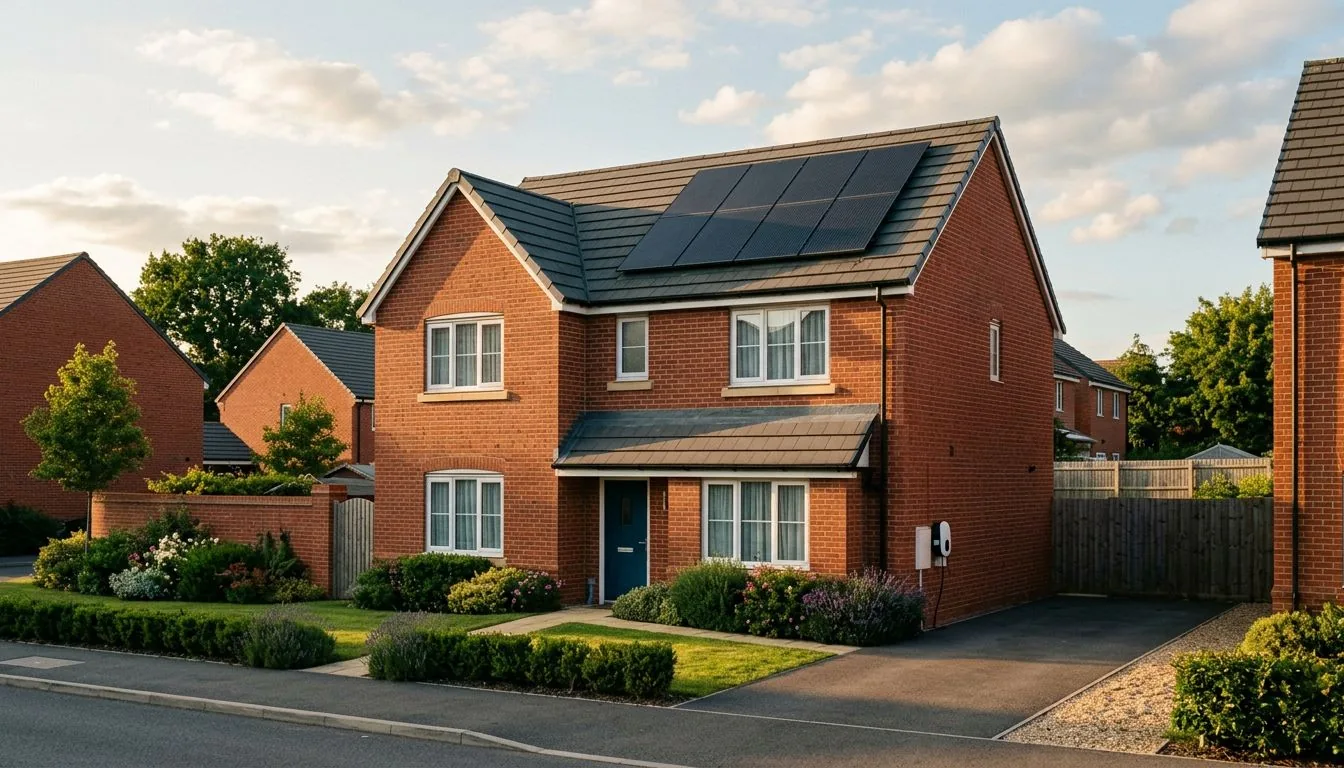
Solar panels pros and cons come down to one trade: you pay a lot now to cut bills for decades. For many UK homes that trade still works. For others, it does not. This guide sets out both sides with real figures, so you can judge your own roof.
Quick verdict
Solar suits you if you own your home, have a sunny roof and plan to stay for at least 13 years. It suits you less if your roof is shaded, you may move soon, or you cannot afford the upfront cost.
On our standard model, a 4 kWp system costing about £7,500 saves and earns roughly £590 a year at October 2026 prices. That means it pays for itself in about 13 years, or roughly 11–15 years depending on price, roof and export tariff. Over 25 years the system returns roughly £13,800, about £6,300 more than it cost, at today’s prices.
Pros of solar panels
Lower electricity bills
Panels cut the electricity you buy from the grid. Under the Ofgem price cap for October to December 2026, power costs an average of 26.32p per kWh. Every kWh you use from your own roof is one you do not buy.
A typical UK home uses about 2,700 kWh of electricity a year (Ofgem’s medium figure). However, solar does not touch the standing charge, which is 54.83p a day.
Income from exports
In Great Britain, the Smart Export Guarantee pays you for power you send back to the grid. There is no fixed rate, because each supplier sets its own. Open-market rates are about 3–6p per kWh, while rates tied to a supplier you also buy from reach about 12p.
Our model assumes 12p. For the full cost and saving figures, see our guide to what solar panels cost and save.
A long life with little upkeep
Panels typically last 25–30 years or more. Good modern panels lose roughly half a percent of output a year, so after 25 years they still make around 85–90% of their original output. Our guide explains how long solar panels last.
Panels have no moving parts, so upkeep is light. A rinse and a yearly look at the inverter display cover most needs.
Zero VAT for now
Solar panels fitted to homes are zero-rated for VAT until 31 March 2027. After that the rate goes to 5%. That saves roughly £300–£400 on a typical 4 kWp system compared with the old 5% rate.
Since 1 February 2024, home batteries have been zero-rated too, until the same date. Therefore the date of your install matters, so ask your installer which VAT rate applies to your job.
Sources: HMRC VAT manual, Ofgem price cap notice, Ofgem SEG page.
Cons of solar panels
The upfront cost
A typical 4 kWp system costs about £6,500–£8,500 fitted, as at October 2026. Government figures based on MCS installs put the average home retrofit at roughly £1,650–£2,100 per kW. A 5 kWh battery fitted with the panels typically adds £2,500–£4,000.
Most people pay in one go or take a loan. Because loan interest adds to the cost, it also lengthens the payback. Check whether free solar panel schemes apply to you before you borrow, since most offers carry strict conditions. Our solar grants guide explains the schemes that may help with the upfront cost.
A long payback
Payback is the biggest drawback. On our model, a 4 kWp system without a battery pays back in about 11–15 years, typically 13. With a 5 kWh battery, expect about 14–18 years on a flat-rate tariff.
A battery raises the yearly benefit to about £740, yet its extra cost slows the payback. Batteries pay back faster on a cheap overnight tariff, which this model leaves out. Read our full guide to the solar payback period for the maths.
Weak winter output
December output is roughly a quarter to a third of June’s. In Glasgow it falls under a fifth. Because demand peaks in winter, you will still buy most of your power from the grid between November and March.
Cloud cuts output too, but panels still work in daylight. See how panels perform in winter and cloud for month-by-month detail.
Roof and location limits
A shaded, north-facing or small roof cuts your output sharply. North-facing panels produce only about half as much as south-facing ones. East- or west-facing arrays make roughly 80%.
Location counts as well. Using the EU’s PVGIS model, 1 kWp of south-facing panels at 35° makes about 850 kWh a year in Glasgow and about 1,020 in Bristol. A 4 kWp system therefore makes about 3,400 kWh in Glasgow against about 4,090 in Bristol. See solar panels in Scotland and Bristol solar costs and support for local detail.
Extra costs and hassle
You may need to replace the inverter once during the panels’ life. Scaffolding, roof repairs and bird-proofing can add to the bill, and none of those costs is in our model. Rented homes and leaseholds also bring permission hurdles.
Quality varies too. Panels and warranties differ between makers, so compare panel manufacturers before you sign.
Sources: DESNZ solar PV cost data, PVGIS tool (EU JRC).
Solar panels pros and cons at a glance
| Pros | Cons | |
|---|---|---|
| Money | Lower bills and export income | £6,500–£8,500 upfront for 4 kWp |
| Time | 25–30+ years of output | Payback of about 11–15 years |
| Weather | Works in daylight | Winter output is a fraction of summer’s |
| Home | Little upkeep | Roof and shade limit the gain |
How to weigh them up
List your own numbers before you decide. Write down your yearly electricity use, your roof direction and how long you plan to stay. Then compare the payback range with that timeline.
If the payback is shorter than your stay, the sums work in your favour. However, if it is longer, solar may still suit you for other reasons, such as lower exposure to price changes. Get two or three quotes, because prices vary between installers.
Who gains the most
Solar pays best when you use power in the day. Working from home, running a heat pump or charging an electric car in daylight all raise your savings. A high import price helps as well, because every kWh you use from the roof saves you more.
A south-facing roof, no shade and a plan to stay for 15 years all push the odds your way. Our guide to whether solar panels are worth it in the UK gives the full verdict.
Who should wait
Hold off if you plan to move within a few years, since you may not recoup the cost. Also wait if your roof needs repairs soon, because you would pay for scaffolding twice. A heavily shaded roof is another reason to pause.
None of this means you should rule solar out for good. It means you should get a proper survey and compare quotes first. You can request free installer quotes with no obligation, then decide at your own pace.
Frequently asked questions
What are the main advantages of solar panels?
They cut your electricity bill, earn export payments and last 25–30 years or more. They also need little upkeep. Zero VAT applies to installs until 31 March 2027.
What are the main disadvantages of solar panels?
The upfront cost is high, at about £6,500–£8,500 for 4 kWp. Payback takes about 11–15 years, and winter output is low. Roof direction and shade can cut your gain.
Do solar panels add value to a home?
Many buyers like lower bills, but we have no verified figure for the uplift. Keep your MCS certificate and warranty papers, since buyers ask for them.
Are solar panels worth it if I will move in five years?
Probably not on cost alone, because payback takes about 11–15 years. However, a buyer may value the lower bills. Ask local estate agents how buyers see solar in your area.
Do solar panels work on cloudy days?
Yes, but they make less power. Output falls in cloud and in winter, yet panels still work in daylight, so you will still save something.