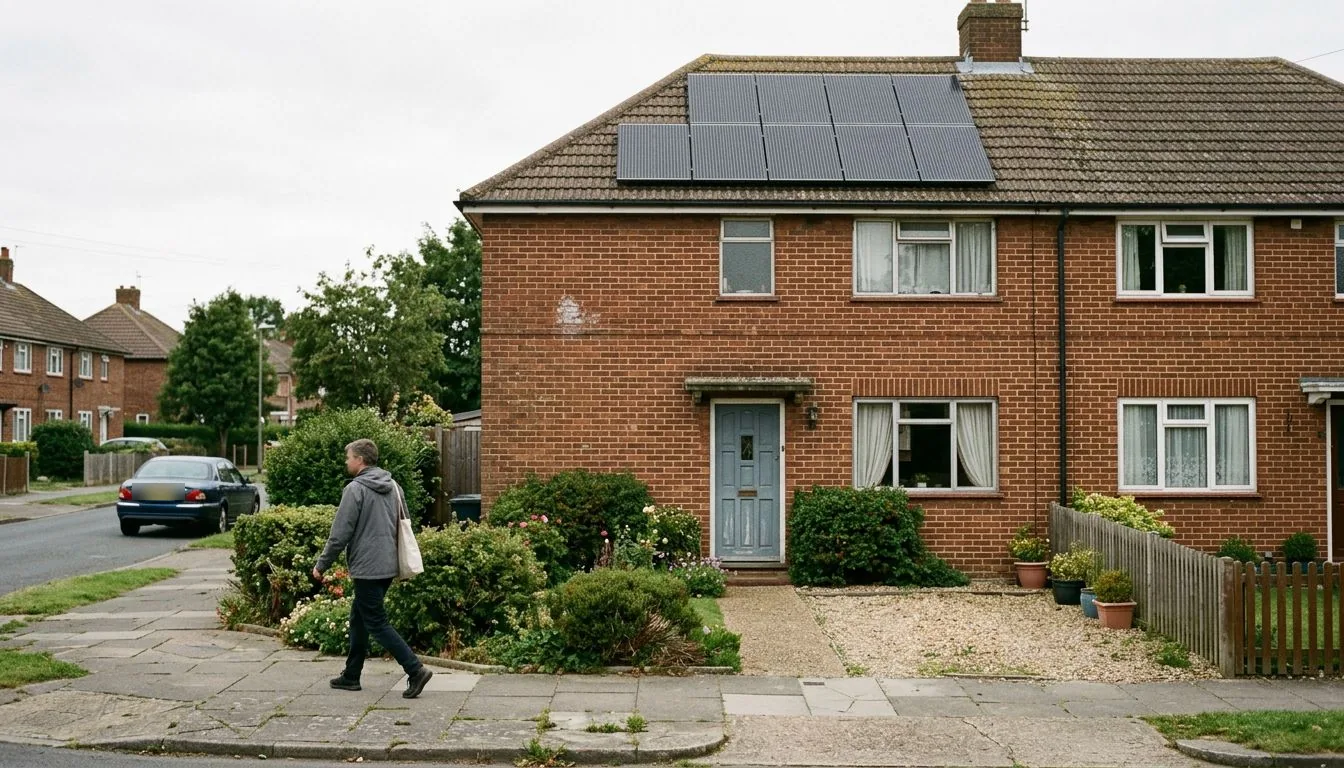
Are solar panels worth it in the UK? In short, yes for many homes, but the payback is slower than older guides claimed. Prices have fallen, yet so has the export rate you are paid. Here is an honest look at the numbers as at October 2026.
What do solar panels cost in the UK?
A typical 4 kWp system costs about £6,500–£8,500 fitted, or around £7,500 in the middle. That price includes 0% VAT. Government figures based on MCS installs put the average home retrofit at roughly £1,650–£2,100 per kW.
Costs rise with system size, as the table shows.
| System size | Panels (430–450 W each) | Typical fitted cost |
|---|---|---|
| 3 kWp | 7 | £5,500–£7,000 |
| 4 kWp | 9–10 | £6,500–£8,500 |
| 5 kWp | 11–12 | £7,500–£9,500 |
| 6 kWp | 13–14 | £9,000–£11,000 |
Scaffolding, a complicated roof and bird-proofing can all add to the bill. For a full breakdown of installation prices, see our guide to installing solar panels: what it costs. You can also compare the figures on our page about solar panel costs and savings in the UK.
Sources: DESNZ solar PV cost data; HMRC VAT guidance.
How much do solar panels save each year?
On our standard model, a 4 kWp system saves and earns roughly £590 a year. We assume the system makes about 3,600 kWh in its first year. We also assume you use 30% of it at home and sell the rest.
Here is where that money comes from:
| Source | Basis | Per year |
|---|---|---|
| Electricity you don’t buy | 1,080 kWh at 26.32p | about £284 |
| Export payments | 2,520 kWh at 12p | about £302 |
| Total | about £587 |
The 26.32p figure is the Ofgem price cap average for October to December 2026. It includes no VAT, because VAT on household electricity is removed until 31 March 2027. Solar does not reduce your standing charge of 54.83p a day.
Note that 12p is a rate you only get if you import from the same supplier. Open-market export rates are lower, at about 3–6p. See our guide to the best Smart Export Guarantee rates for the detail.
Sources: Ofgem price cap, October to December 2026; Octopus Outgoing.
How long is the solar panel payback period?
On that model, a £7,500 system pays for itself in about 13 years. Depending on price, roof and export tariff, the range is roughly 11–15 years. For a deeper look, read the solar payback period.
The table shows how the answer moves.
| Case (4 kWp, no battery) | Year-1 benefit | Payback |
|---|---|---|
| Standard: £7,500, 12p export | £587 | about 13 years |
| Cheaper install at £6,500 | £587 | about 11 years |
| Dearer install at £8,500 | £587 | about 14–15 years |
| Open-market export at 4.1p | £388 | about 19–20 years |
| 15p export | £662 | about 11–12 years |
| South-facing roof in southern England | £652 | about 11–12 years |
Over 25 years, the standard system returns roughly £13,800. That is about £6,300 more than it cost, at today’s prices. The model assumes panels lose 0.5% of output a year, and it leaves out maintenance and inverter replacement.
In other words, solar is a steady saver rather than a quick win. It suits people who plan to stay put.
Will a battery make solar worth it?
A battery raises your annual benefit but lengthens the payback. A 4 kWp system with a 5 kWh battery costs about £10,000–£14,000 and benefits you by about £740 a year. On a flat-rate tariff, that means payback of about 15–16 years.
However, the model leaves out cheap overnight tariffs, which can shorten a battery’s payback. Our review of the best solar batteries covers this in more detail.
What changes the answer?
Four things matter most.
Your roof. In England, the best angle is about 35–40° facing due south. East- or west-facing panels make about 80% as much, and north-facing roofs only about half. For a typical roof we assume 900 kWh per kWp a year. Southern England can manage 1,000 or more, while a shaded roof in the north gets nearer 750–800.
Where you live. Yield varies from north to south. For example, using the EU’s PVGIS model, 1 kWp of south-facing panels in Bristol makes about 1,020 kWh a year. In Glasgow it makes about 850. You can read more about solar panels in Scotland or Bristol solar costs and support. Support also differs by nation, so check current UK solar funding schemes for where you live.
When you use power. If someone is home in the day, you use more of your own solar. As a result, your bill falls further.
VAT. From 1 April 2027, 5% VAT returns on installs. That adds about £375 to a £7,500 system. Prices for electricity could also rise, which would shorten the payback.
Sources: PVGIS solar tool; HMRC VAT guidance.
When might solar not be worth it?
Solar is harder to justify in a few cases. For instance, a roof that is heavily shaded or faces north will make far less power. Likewise, if you expect to move soon, you may not recoup the cost.
Listed buildings and some conservation areas also need consent. Finally, a very low export rate stretches the payback to about 20 years. Read the pros and cons of solar panels before you decide.
We could not find a reliable figure for how much solar adds to a home’s value. So we leave it out of the payback sums.
Do solar panels work in the UK’s cloudy climate?
Yes. Panels run on daylight, not just direct sun, so they still produce on grey days. Output is lower in winter, though. See our explainer on solar output on grey days for monthly figures.
What does a home solar system involve?
A system has panels, an inverter, mounting and wiring, and an MCS-certified installer. It also needs a smart meter to be paid for export. Our home solar guide explains the steps, and you can request free quotes from installers.
Frequently asked questions
What happens to solar panels after 25 years?
Good modern panels lose roughly half a percent of output a year. After 25 years they still make around 85–90% of their original output. You may need to replace the inverter once during the panels’ life.
How long do solar panels last?
Panels typically last 25–30 years or more. Expect a product warranty of at least 12 years and a performance guarantee of 25–30 years. Check the datasheet before you buy.
Will the return on solar get worse after March 2027?
It may. From 1 April 2027 the 0% VAT on installs ends and the rate goes to 5%. That adds roughly £300–£400 to a typical 4 kWp system. Electricity bills are due to carry VAT again too, which raises the value of each unit you use yourself.
How do I know if my installer is reputable?
Use an MCS-certified installer that belongs to a consumer code. Without an MCS certificate you can’t be paid under the Smart Export Guarantee. Get several quotes and compare them.
Is solar still worth it if I get a low export rate?
It can be, but payback is slower. At an open-market rate of 4.1p, our model gives about 19–20 years. A battery or a better export tariff can help.