Picking the best solar battery in the UK is harder than picking panels. Capacity, warranty, backup power and tariff support all differ. Prices also vary a lot. This guide explains what a battery costs, whether it pays back, and what to compare, as at October 2026.
What does a solar battery cost in the UK?
A 5 kWh battery fitted at the same time as your panels typically adds £2,500–£4,000. A 10 kWh battery costs about £4,000–£8,000. That works out at roughly £400–£700 per kWh of usable capacity.
A battery added on its own costs more. It needs a separate install, and often its own inverter. For the panel side of the bill, see what fitting solar panels costs. Prices for a 4 kWp system with a 5 kWh battery fitted together run from about £10,000 to £14,000.
VAT is currently 0% on home batteries. That applies to batteries added to existing solar, standalone batteries and batteries fitted with new panels. It ends on 31 March 2027, when 5% VAT returns on installs.
Sources: HMRC guidance on batteries; HMRC guidance on solar installs. For the basics, read our guide to solar battery storage costs and benefits.
Is a solar battery worth it?
On a flat-rate tariff, usually not on cost alone. Our standard model shows a 4 kWp system with a 5 kWh battery benefiting you by about £740 a year. That compares with about £590 without a battery.
However, the battery adds £4,000 to the price. As a result, payback stretches to about 15–16 years, against about 13 years for panels alone. See what solar panels cost and save for the full model.
| 4 kWp system | Cost | Benefit per year | Payback |
|---|---|---|---|
| No battery | about £7,500 | about £590 | about 13 years |
| With 5 kWh battery | about £11,500 | about £740 | about 15–16 years |
| With battery, 4.1p export | about £11,500 | about £630 | about 18–19 years |
The model assumes you use 60% of your solar with a battery, against 30% without. It leaves out cheap overnight tariffs, which can shorten a battery’s payback.
Even so, many people want a battery for other reasons. For example, you may want backup in a power cut or to be less exposed to price changes.
Should you store solar or export it?
Without a battery, you sell the surplus to your supplier. At 12p a unit, that is worth less than the 26.32p you pay to buy power back. Storing it is therefore worth more per unit.
However, the extra unit has to cover the battery’s cost. If your export rate is low, a battery narrows the gap. If you can get a good rate, comparing SEG export tariffs may beat storing.
Sources: Ofgem price cap, October to December 2026.
How much battery capacity do you need?
A typical UK home uses about 2,700 kWh of electricity a year (Ofgem’s medium figure). That is roughly 7.4 kWh a day. A 5 kWh battery therefore covers a large share of a normal evening.
Choose a bigger battery if you have an EV or a heat pump. Our guide to pairing solar with an EV charger explains the extra demand. Households with heat pumps can read about running a heat pump with solar.
In winter, solar rarely fills a large battery. So a battery that charges from cheap overnight power can help more than one that waits for the sun.
Which solar battery brands should you compare?
Several brands sell widely in the UK, including GivEnergy, FoxESS, Tesla Powerwall 3, SolarEdge, Sungrow and Huawei. We do not rank them, because prices, specs and warranties change. Always read the current datasheet before you buy.
| What to check | Why it matters |
|---|---|
| Usable capacity (kWh) | Sets how much evening demand you can cover |
| Power output (kW) | Limits how many appliances run at once |
| Warranty length and cycles | Shows how long the battery should last |
| Backup in a power cut | Not always included as standard |
| Tariff support | Smart tariffs need compatible software |
| Installer experience | A familiar installer reduces risk |
As one example, GivEnergy’s 9.5 kWh battery comes with a 12-year warranty and unlimited cycles, according to its 2026 datasheet. Installed prices for that size have run from about £4,000 to £7,500.
For other brands, ask your installer for the datasheet and compare warranties like for like. Most modern home batteries use lithium iron phosphate (LFP) chemistry, but check the model you are offered.
Do batteries make sense in small homes?
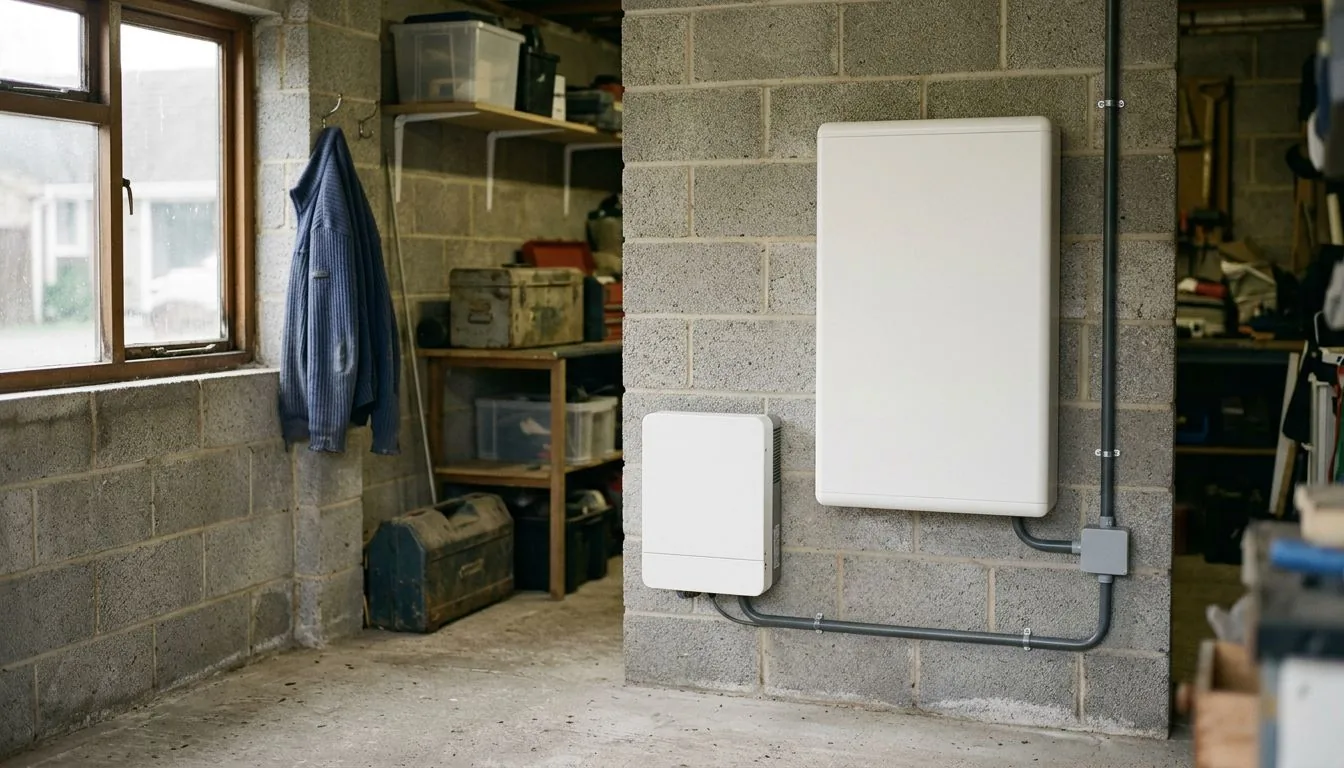
In a terrace or flat, space is the main limit. A wall-mounted unit needs a suitable spot and safe clearances. If that is you, see our page on London solar costs and support.
Self-consumption matters too. In Manchester, for example, a home that is empty by day will export most of its summer solar. A battery changes that, as our page on Manchester solar costs and support explains.
What about Northern Ireland?
Northern Ireland has no Smart Export Guarantee. Power NI currently pays 11.88p per kWh for exported electricity, from October 2026 to September 2027. Check with Power NI for the current rate.
Because export pays little in many cases, storing power can look more attractive. See Northern Ireland solar costs and support for more.
Frequently asked questions
Can I add a battery to my existing solar system?
Yes. Some batteries connect on the AC side and work with your current inverter. Others connect on the DC side and need a compatible hybrid inverter. Ask your installer which suits your system, and what it adds to the cost.
What battery capacity do I need?
It depends on your evening use. A typical home uses about 7.4 kWh a day in total, so a 5 kWh battery covers much of it. Add capacity if you have an EV or heat pump.
What happens to the battery in a power cut?
Some batteries give backup power during an outage, but not all do as standard. Check whether backup is included or an add-on. It is worth asking before you buy.
Will a battery affect my panel warranty?
Adding a battery to existing solar does not normally affect panel warranties. Even so, use an MCS-certified installer and keep the paperwork. Ask the installer to confirm in writing.
Is a battery covered by 0% VAT?
Yes, until 31 March 2027. The zero rate covers batteries fitted with new solar, added later, or installed on their own. After that date 5% VAT applies.