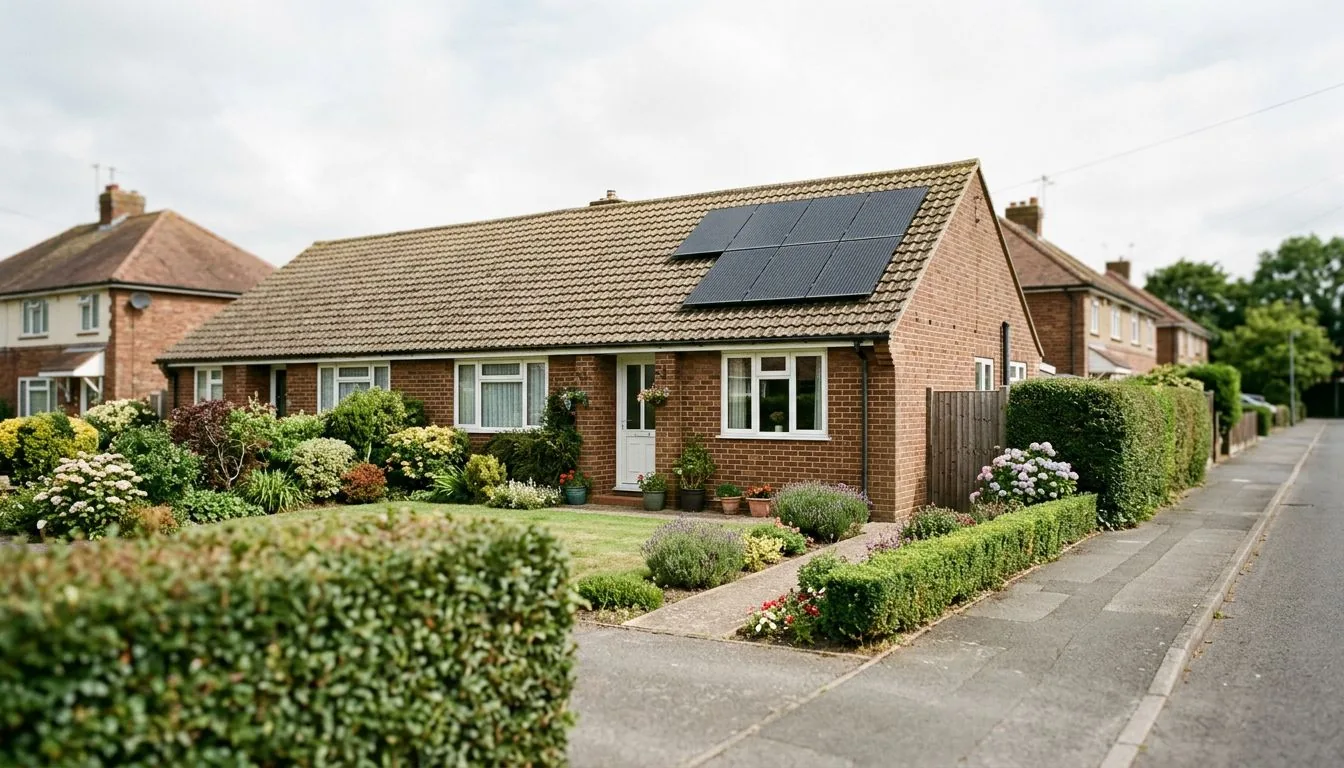
Solar panel grants UK: what is available now
Most people ask about free solar panels first. In practice, the schemes below are the whole picture, although several have ended or changed.
The right option depends on where you live. After the table, we cover each nation in turn.
| Scheme | Where | Status | What it means |
|---|---|---|---|
| 0% VAT on solar and batteries | UK | Until 31 March 2027 | Saves about £300–£400 on a 4 kWp system. The rate goes to 5% from 1 April 2027. |
| Smart Export Guarantee | England, Scotland, Wales | Open | Pays you for exported power. It is income, not a grant. |
| ECO4 | Great Britain | Ends 31 December 2026 | Whole-house packages for eligible low-income homes. There is no successor scheme. |
| Great British Insulation Scheme | Great Britain | Closed 31 March 2026 | It never funded solar panels. |
| Warm Homes Plan | Mainly England | Published January 2026 | Promises loans and funded installs. Most schemes open from 2027. |
| Warm Homes: Local Grant | England | Run by councils | May include solar for low-income homes. Ask your council. |
| Home Energy Scotland | Scotland | PV-T loan only | Interest-free loan up to £5,000 for hybrid PV-T panels. No grant, and no funding for standard panels. |
| Nest | Wales | Open | Can fit solar free for eligible lower-income households. |
| Northern Ireland | Northern Ireland | No general grant found | Check nidirect for any new scheme. |
Because grants are thin, the real cost matters more. See typical UK solar costs and payback, and what fitting solar panels costs, which is the bill any support would offset.
The 0% VAT relief on panels and batteries
Solar panels fitted to homes are zero-rated for VAT until 31 March 2027. After that the rate goes to 5%. The zero rate saves roughly £300–£400 on a typical 4 kWp system, compared with the old 5% rate. Timing matters because the relief is temporary.
Since 1 February 2024, home batteries have also been zero-rated until 31 March 2027, including batteries added later or installed without solar. To learn more about storage, read about adding battery storage.
ECO4, GBIS and the Warm Homes Plan
ECO4 is closing on 31 December 2026, and installers are finishing existing jobs. Government has said there will be no successor supplier obligation. Therefore, do not plan a new project around it.
Solar was only ever part of ECO4 as a whole-house package for eligible low-income homes. Be wary of cold calls offering "free solar panels", and always check the installer's MCS certificate, since only certified installers can register your system for export payments.
The Great British Insulation Scheme closed on 31 March 2026. However, it never funded solar.
What replaces them
The government's Warm Homes Plan (January 2026) promises low- and zero-interest loans for solar and batteries. It also promises fully funded installs for low-income homes. However, most of these schemes open from 2027, so check gov.uk before applying.
Your council may also run a Warm Homes: Local Grant for low-income homes in England. While some councils used ECO4's local flexibility route to refer homes that did not claim benefits, ECO4 is now closing. Ask your council what it offers instead.
The Smart Export Guarantee is not a grant
The Smart Export Guarantee (SEG) replaced the Feed-in Tariff on 1 January 2020. Suppliers in Great Britain must pay you for power you export. It covers England, Scotland and Wales, although not Northern Ireland.
Licensed suppliers with 150,000 or more home customers must offer a tariff. The rate must be above zero. Since each supplier sets its own, it pays to compare. For a fuller ranking, see comparing SEG export tariffs.
What you need to qualify
- An MCS-certified installation and installer, or an accredited equivalent.
- A meter that measures your export, normally a smart meter.
- A system of up to 5 MW, so every home system qualifies on size.
Example rates, October 2026
Rates change often, because suppliers update them. The best ones usually need you to buy your electricity from the same supplier, so check each tariff before you decide.
| Supplier | Rate | Conditions |
|---|---|---|
| Octopus Energy (Outgoing Octopus) | 12p / kWh | Only if you also buy electricity from Octopus on an eligible import tariff. Needs a smart meter. |
| Octopus Energy (open SEG) | 4.1p / kWh | For customers of other suppliers. |
| OVO | 4p, or 12p for OVO electricity customers | The 4p tariff is open to any import supplier. The 12p tariff is for homes under 30 kW. |
| British Gas | About 3p open, about 15p for customers | 2026 figures from comparison sources. Check before you sign up. |
| ScottishPower | 6p open, 15p with conditions | SmartGen at 6p was the highest open rate Which? found in April 2026. |
| E.ON Next | Around 17.5p for eligible customers | Conditions apply, and the primary page was unavailable. Check current rates. |
| EDF | About 3p open, about 15p for customers | 2026 figures from comparison sources. Check before you sign up. |
Government grants for solar panels UK by nation
Energy policy is partly devolved, so what you can claim depends on your nation. Each nation also has its own planning rules and yields.
England
England relies on the Warm Homes Plan and on council schemes. Your council may run the Warm Homes: Local Grant, so ask it directly about solar. We list a city scheme only when we can verify it, because schemes change often.
Local figures differ. For example, see what solar generates in London and what solar generates in Manchester.
Scotland
Home Energy Scotland no longer funds standard solar panels or batteries. The only solar technology it still supports is hybrid PV-T panels, through an interest-free loan of up to £5,000. There is no grant for them.
You need an MCS-certified installer and product, because the loan requires both. The helpline is 0808 808 2282. For more, read about Scotland solar costs and support.
Wales
The Welsh Government's Nest scheme can fit solar panels free for eligible lower-income households. You qualify through a means-tested benefit or a low household income, and your home needs an EPC rating of E (54) or worse.
The limit is D (68) or worse if someone in the home has an eligible health condition. Because Nest decides which measures you get, solar is not guaranteed. The Nest helpline is 0808 808 2244, and you can read what solar generates in Wales.
Northern Ireland
There is currently no general government grant for home solar panels in Northern Ireland. Check nidirect for any new scheme, since support can change.
Northern Ireland has no Smart Export Guarantee either. Power NI currently pays 11.88p per kWh for exported electricity from October 2026 to September 2027, although you should check with Power NI. Read what solar generates in Northern Ireland.
Buying a new-build or a home with panels
If you are buying a new home, panels may already be part of the build. However, check what is included. For the details, see solar on new-build homes.
Solar grant questions
Is there a government grant for solar panels in the UK?
Not one open to every homeowner. As far as we can find, no scheme gives all UK households a grant for ordinary solar panels in October 2026. Help is limited to 0% VAT until 31 March 2027 and income from the Smart Export Guarantee, while some low-income households can also get support.
Can I get free solar panels from the government?
Possibly, if you are on a low income, but check first. ECO4 closes on 31 December 2026. Therefore, do not plan a new project around it. The Warm Homes Plan promises solar with nothing to pay upfront for low-income households, mostly from 2027, so check gov.uk before applying.
Is the Smart Export Guarantee a grant?
No. It is payment for electricity you export, set by each supplier. Since it is payment rather than a grant, it does not cut your installation bill. Suppliers with 150,000 or more domestic customers must offer a tariff above zero. You need an MCS-certified installation to qualify.
Are there solar grants in Scotland, Wales or Northern Ireland?
It differs by nation. Home Energy Scotland no longer funds standard panels, only hybrid PV-T panels through a loan. Wales has Nest for eligible lower-income households, while we found no general grant in Northern Ireland.