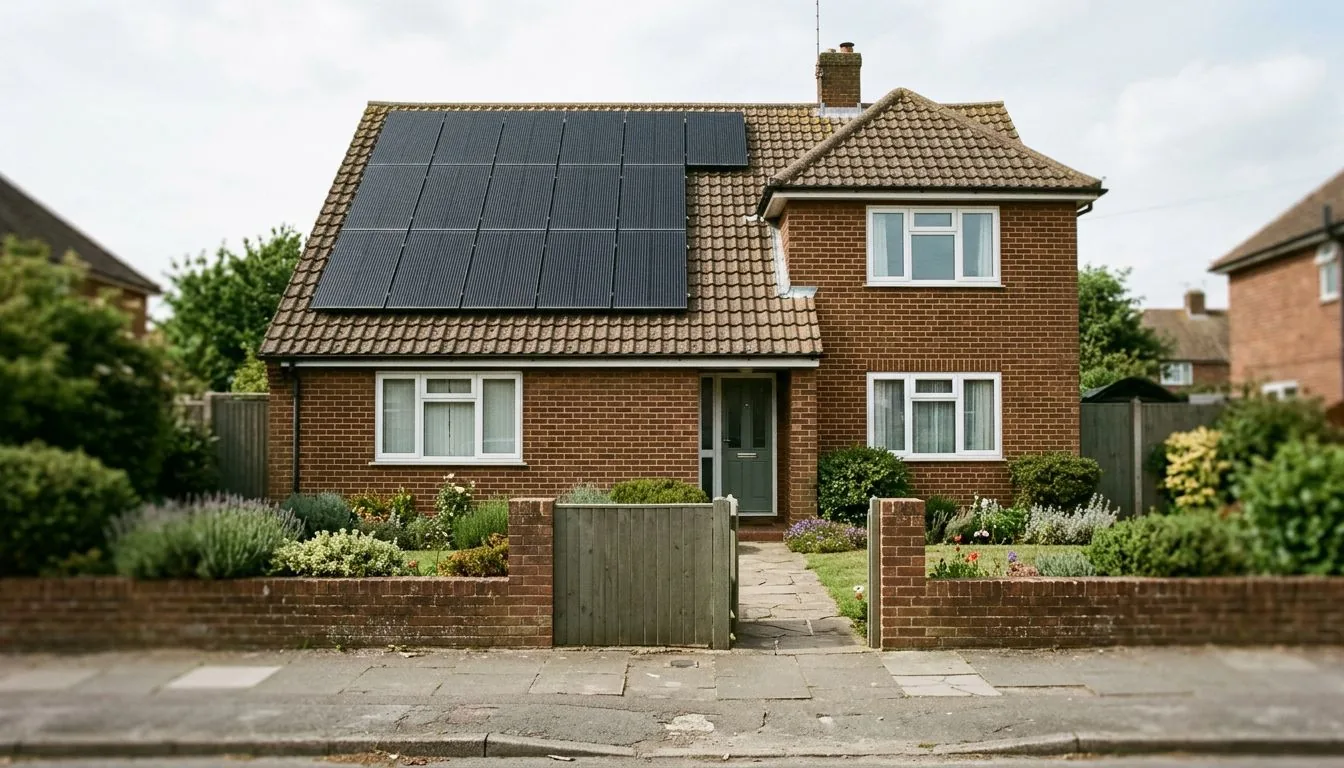
Buying a house with solar panels can be a real plus. You inherit a generator that cuts the electricity bill. However, the paperwork matters. This checklist covers what to ask before you exchange contracts.
Who owns the solar panels?
First, find out whether the panels belong to the seller outright or are leased. Some homes had panels fitted under “rent-a-roof” arrangements. In those deals, a company fitted the panels and kept ownership, in return for the Feed-in Tariff income.
A lease can transfer with the property. So it is vital to check before you buy. Signs of a leased system include:
- the seller paid nothing for the installation;
- a lease agreement appears in the title deeds;
- a company, rather than the seller, holds the panel registration.
The table shows what to check in each case.
| Situation | What to check |
|---|---|
| Owned outright | MCS certificate, inverter warranty, grid notification |
| Leased (rent-a-roof) | Lease terms, remaining length, whether the company still trades, and whether it can be assigned |
| Free-installation scheme | Who is registered for Feed-in Tariff payments, and whether panels can be assigned |
Ask your conveyancer to look for a charge or lease on the title. You can also ask the seller for written confirmation.
Which documents should you ask for?
Your conveyancing solicitor should request these from the seller.
MCS installation certificate. The Microgeneration Certification Scheme (MCS) certificate shows a certified installer fitted the system. Without it, you can’t be paid under the Smart Export Guarantee. You can check installers at MCS. Our guide to how a solar installation works step by step shows which sign-off papers a proper job should leave behind.
Consumer-code membership. Check the installer belonged to a consumer code, such as RECC or HIES. That gives you some protection.
Warranties. Panels usually come with a product warranty of 12–25 years and a performance warranty of 25–30 years. Ask whether the warranties pass to you. Our guide to mono, poly and thin-film panels helps you identify the panel type.
Inverter details. A string inverter often needs replacing once during a panel’s life, at about 10–15 years. Ask how old it is, because you may need to budget for a new one.
Grid notification. Ask for proof that the seller told the network operator about the system, under the G98 or G99 process. If they never did, the system may lack proper commissioning.
Feed-in Tariff details. If the system claimed the Feed-in Tariff, check who is registered to receive payments. Octopus, for example, does not offer Outgoing Octopus to homes that received FiT payments in the last 12 months.
Planning records. Ask whether the installer needed any consent. Our guide to planning permission rules for solar explains when it is.
How do you check the condition of the system?
Ask for the generation history, because it shows how well the system performs. Compare it with typical figures in monthly UK solar output data. A system that makes far less than expected may be shaded, dirty or faulty.
Also look at the panels and roof. See solar panel cleaning and maintenance for what to look for. A surveyor can check the fixings and the roof beneath.
Panel types vary too. Some homes have solar tiles versus panels, where the roof covering itself generates power. Ask what is installed, because repairs differ.
To understand how a typical system works, read our residential solar panels overview.
Do solar panels add value to a house?
Many buyers like panels, but we could not find a reliable figure for how much they add. So don’t pay a premium based on a quoted percentage. Instead, ask an estate agent or surveyor for local evidence.
The EPC should also list the panels. If it doesn’t, ask the assessor to check it.
Will a mortgage lender accept solar panels?
Most lenders are comfortable with panels that the seller owns. However, leased panels can complicate a mortgage, because some lenders treat a lease as a charge on the property. Check with your lender before you exchange.
How do you register for the Smart Export Guarantee after buying?
Once you complete, register the system in your own name with a supplier. You will need the MCS certificate and your meter details. Octopus, OVO and others offer tariffs, and the rates vary.
Many of the highest rates need you to import from the same supplier. See the best Smart Export Guarantee rates for a dated comparison.
Sources: gov.uk on the Smart Export Guarantee.
Does your location change what to check?
Flats and terraces raise their own questions. For example, you may need the freeholder’s consent. Our page on solar panels in London covers the property side.
In Yorkshire, stone terraces and older homes are common. See Leeds solar costs and support for more. To judge what the system is worth to you, read what solar panels cost and save.
Frequently asked questions
What if the installer has gone out of business?
That is common. The panel and inverter warranties are normally with the manufacturer, so they may still apply. Any MCS-certified installer can service the system. Ask the seller for the original paperwork.
How do I find out if the panels are leased?
Ask your solicitor to check the title register for charges or lease agreements. Also ask the seller for written confirmation. If the seller receives the Smart Export Guarantee payments in their own name, that is a good sign of ownership.
Can I remove leased panels?
Only with the lease company’s agreement, and it can be costly. Read the lease terms carefully. In many cases it is simpler to keep the lease running.
Should I negotiate the price if the inverter is old?
It is a fair point to raise. An ageing inverter may need a replacement soon. Get an estimate from an installer before you make an offer.
What if there is no MCS certificate?
Without one you can’t be paid under the Smart Export Guarantee. Ask the seller whether it can be found, and ask your solicitor to raise it before exchange.